
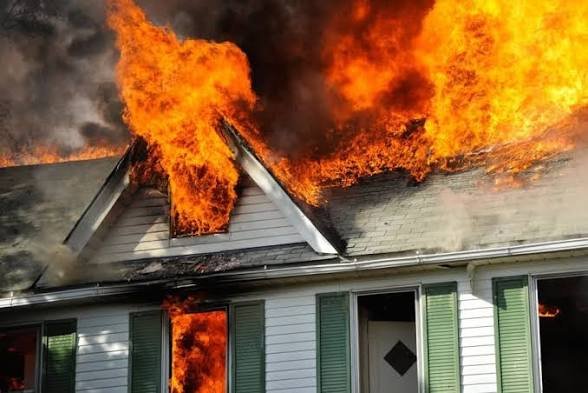
A safe home is not only a place where people feel comfortable. It should also be a place where everyone understands what to do if a fire starts. Home fires can develop from many everyday hazards, including cooking equipment, electrical appliances, heating devices, candles, and gas-related equipment. Good fire safety is therefore about reducing risks, detecting problems early, and having a clear plan for emergencies.
Homeowners in Pakistan can take several practical steps to improve fire preparedness. Smoke detectors, fire alarms, suitable extinguishers, clear escape routes, safe electrical practices, kitchen precautions, and regular maintenance can all contribute to a safer home.
The Building Code of Pakistan Fire Safety Provisions 2016 includes provisions dealing with fire prevention and life safety. It also contains requirements for smoke alarms and fire alarm systems in certain occupancies.
A fire alarm system in Pakistan can be an important part of a home’s overall protection strategy, but an alarm is only one layer of safety. Prevention and evacuation planning are equally important.
What Is Home Fire Safety?
Home fire safety means taking reasonable steps to prevent fires, detect them early, warn household members, and provide a safe way to leave the property.
A complete home fire-safety plan can include:
- Smoke alarms
- Fire detection and alarm equipment
- Suitable fire extinguishers
- Safe electrical practices
- Kitchen safety
- Gas-cylinder precautions
- Clear exits
- Emergency lighting where appropriate
- A family escape plan
- Regular equipment checks
- Fire-safety education
The exact equipment needed can vary according to the home’s size, construction, occupancy, and hazards.
The most important objective is protecting people. Property protection is important, but occupants should never put themselves at unnecessary risk trying to save belongings.
Identify Common Fire Hazards at Home
The first step in improving home fire safety is identifying possible sources of fire.
Walk through the house and consider areas such as:
- Kitchen
- Bedrooms
- Living rooms
- Electrical panels
- Storage areas
- Garages
- Generator locations
- Gas-cylinder areas
- Balconies
- Workshops or hobby areas
Look for damaged electrical equipment, overloaded outlets, combustible materials near heat sources, blocked exits, and other unsafe conditions.
A simple inspection can help homeowners identify problems before they become emergencies.
Kitchen Fire Safety
The kitchen is an important area for fire prevention because cooking involves heat, electrical appliances, and sometimes combustible cooking materials.
Homeowners should maintain cooking equipment properly and avoid leaving cooking activities unattended.
Keep unnecessary combustible materials away from heat sources, and make sure kitchen equipment is used according to its manufacturer’s instructions.
If a cooking-related fire occurs, people should prioritize their safety and follow their emergency plan. A growing fire should never be treated as an opportunity for an untrained person to take unnecessary risks.
Commercial cooking environments can have additional requirements, but the basic household principle remains the same: prevent hazards, maintain equipment, and know how to respond to an alarm.
Electrical Safety Matters
Electrical problems can contribute to residential fires.
Homeowners should pay attention to warning signs such as:
- Damaged cords
- Loose electrical connections
- Unusual heat around outlets
- Burning smells
- Sparking
- Frequently tripping electrical protection
- Poor-quality or damaged electrical equipment
Electrical problems should be assessed by an appropriately qualified electrician rather than repeatedly ignored.
Avoid overloading outlets and do not rely on improvised electrical repairs.
Regular electrical maintenance can reduce risks and help identify problems before they develop into more serious hazards.
Gas Cylinder Safety
LPG cylinders are used in many Pakistani homes, particularly for cooking.
Gas-cylinder safety should therefore be included in a household fire-safety plan.
Keep gas equipment in appropriate condition and avoid improvised repairs. The area around gas equipment should be kept suitably maintained, with unnecessary combustible materials controlled.
If a household suspects a gas leak, occupants should prioritize moving away from danger and contacting the appropriate qualified service or emergency authority. People should not experiment with gas equipment or attempt risky repairs.
Children should never be asked to inspect, move, or repair gas-cylinder equipment.
Gas safety and fire detection are complementary parts of a wider safety strategy.
Install Appropriate Smoke Detection
Smoke can spread through a home before occupants see flames.
Smoke detectors can provide an early warning and are therefore an important part of residential fire protection.
Pakistan’s Building Code of Pakistan Fire Safety Provisions contains requirements for smoke alarms in certain residential and other occupancies. For example, the code specifies approved smoke alarms in sleeping rooms for certain lodging or rooming-house occupancies and addresses interconnection in new buildings.
The appropriate smoke-detection arrangement depends on the building and applicable requirements.
Homeowners should make sure alarms are installed appropriately, maintained, and tested according to the manufacturer’s instructions and applicable requirements.
The Role of a Fire Alarm System in Pakistan
A fire alarm system in Pakistan can provide an important early-warning layer in buildings where such systems are appropriate or required.
A larger fire alarm arrangement can include components such as:
- Smoke detectors
- Heat detectors
- Manual alarm points
- Control panels
- Audible notification devices
- Visual notification devices
- Other connected fire-protection equipment
The Building Code of Pakistan Fire Safety Provisions addresses fire alarm systems and automatic detection as part of building fire safety.
For a typical home, the appropriate arrangement may be much simpler than the system used in a large commercial building.
Homeowners should select protection based on the actual characteristics and hazards of the property rather than assuming that one system is suitable for every building.
Test Smoke Alarms Regularly
Installing a smoke alarm is only the beginning.
Homeowners should follow the manufacturer’s instructions for testing and maintenance. If an alarm produces a low-battery warning or fails a test, the issue should be addressed rather than ignored.
NFPA’s home fire-escape guidance recommends testing smoke alarms and making sure everyone in the home knows the sound of the alarm.
If a detector repeatedly produces unwanted alarms, do not simply disable it. The cause should be investigated, because the device may be incorrectly located, unsuitable for its environment, or in need of maintenance or replacement.
Make a Home Fire Escape Plan
Every household should have a simple escape plan.
Start by looking at every room and identifying possible ways out. NFPA recommends planning at least two ways out of each room where possible and ensuring doors and windows used for escape can be opened from inside.
Your plan should identify:
- Primary exits
- Alternative exits
- A safe meeting location outside
- How family members will contact emergency services
- How children will be assisted
- How older adults or anyone needing assistance will be supported
The plan should be discussed with everyone living in the home.
Practice the Escape Plan
A plan that exists only on paper may not be enough.
Families should practice their emergency procedures so everyone becomes familiar with the exits and meeting place.
NFPA recommends practicing home fire drills at least twice a year and using different escape routes when practicing.
Practice should be age-appropriate and should focus on leaving the building safely rather than trying to fight a fire.
Children should know what the alarm sounds like and understand that an alarm means they need to follow the emergency plan.
Keep Emergency Exits Clear
A clear exit can make a major difference during an emergency.
Do not use stairways, doors, corridors, or other escape routes as permanent storage areas.
Furniture, boxes, bicycles, equipment, and other objects can make evacuation more difficult.
Doors and windows that form part of an escape route should also be kept usable.
NFPA’s home escape guidance emphasizes keeping doors and windows clear and ensuring they can be opened easily from inside.
Choose an Outdoor Meeting Point
Families should agree on a meeting location outside the home.
It should be in a safe location away from the building and should be familiar to everyone.
A fixed landmark can make it easier for family members to find one another.
The purpose of the meeting point is to help everyone know who has escaped and reduce the temptation to go back inside.
NFPA recommends establishing an outside meeting place as part of a home fire-escape plan.
Teach Children What to Do
Children need simple, clear instructions.
They should know:
- What a smoke alarm sounds like
- Which exits they can use
- Where the family meeting point is
- Which adults they should follow
- That they should never hide during a fire
- That they should not return inside after leaving
Children should not be expected to investigate smoke or fire.
Adults should make sure the emergency plan accounts for children’s ages and abilities.
NFPA’s home fire-escape materials specifically encourage families to plan for children and ensure that everyone understands the escape procedure.
Plan for Older Adults and People Who Need Assistance
Some household members may require additional help during an emergency.
This can include young children, older adults, or people with mobility, hearing, vision, or other needs.
The escape plan should identify who will provide assistance.
NFPA recommends planning in advance for people who may need help getting outside.
This is much safer than trying to decide responsibilities for the first time during an emergency.
Keep Fire Extinguishers Appropriate and Accessible
A suitable fire extinguisher can be another layer of protection.
However, extinguishers should only be used when the fire is small, the correct equipment is available, the person knows how to use it, and there is a safe escape route.
People should never allow firefighting efforts to delay evacuation when conditions are becoming unsafe.
The type of extinguisher should match the hazards it is intended to protect.
Homeowners should also make sure extinguishers are accessible and maintained according to applicable requirements and manufacturer instructions.
Do Not Depend Only on a Fire Extinguisher
It is easy to think that owning an extinguisher means a home is protected.
It does not.
An extinguisher cannot provide early warning, wake someone who is asleep, or create an escape route.
This is why fire protection should be layered.
Smoke alarms provide warning.
A fire alarm system can notify occupants.
Extinguishers may provide a limited response option.
Clear exits allow evacuation.
An emergency plan tells people what to do.
Maintenance helps keep equipment ready.
Each element has a different purpose.
Keep Flammable Materials Away From Heat
Household materials can become dangerous when placed too close to heat sources.
Paper, cardboard, clothing, curtains, cleaning products, and other combustible materials should be stored appropriately.
Keep unnecessary objects away from cooking equipment and other heat-producing appliances.
Storage areas should be kept organized so that emergency equipment and exits remain accessible.
Good housekeeping is one of the simplest ways to support fire prevention.
Be Careful With Candles and Open Flames
Open flames require attention because they can ignite nearby combustible materials.
Candles and other flame-producing items should never be treated as harmless decorations.
If an open flame is used, responsible adults should ensure that the surrounding environment is appropriate and that the flame is not left unattended.
Families should consider whether safer alternatives can be used for decorative or lighting purposes.
The goal is to reduce unnecessary ignition sources inside the home.
Maintain Generators and Other Equipment
Power interruptions can lead households to use generators and other backup equipment.
These devices can introduce additional fire and electrical hazards if they are poorly maintained or used inappropriately.
Homeowners should follow the manufacturer’s safety requirements and have equipment inspected when necessary.
Generators should never be treated as ordinary household appliances.
Any installation involving electrical connections should be handled by appropriately qualified professionals.
Maintain Your Fire-Safety Equipment
Fire equipment should not be purchased and then forgotten.
Homeowners should periodically review:
- Smoke alarms
- Fire alarm equipment
- Fire extinguishers
- Emergency lighting where applicable
- Electrical systems
- Gas equipment
- Escape routes
- Fire doors where applicable
For larger or more complex fire-protection systems, professional inspection and maintenance are important.
Pakistan Engineering Council lists ME02 as covering the installation, commissioning, and maintenance of fire detection, alarm, and suppression systems and their associated equipment.
The exact maintenance requirements depend on the equipment and building.
Never Ignore a Fire Alarm
An alarm should always be taken seriously.
NFPA’s educational guidance emphasizes that when a smoke alarm sounds, occupants should act rather than treating the signal as something to ignore.
If there is an actual fire, occupants should leave the building and remain outside.
Do not return inside for personal belongings.
Do not delay evacuation while searching for the source of the alarm unless doing so is part of a safe, established procedure and does not put anyone at risk.
If an alarm is repeatedly producing unwanted activations, the cause should be investigated and corrected rather than simply disabling the device.
Fire Safety for Apartments and Multi-Story Homes
Apartments and multi-story homes can present additional evacuation challenges.
Residents should understand which stairs or exits are available and should not depend entirely on elevators during a fire emergency unless emergency authorities specifically direct otherwise.
Doors and corridors should remain clear.
Smoke can affect visibility and movement, so knowing the building’s escape routes before an emergency is important.
Owners and building managers should also ensure that common fire-protection systems are appropriately maintained.
The Building Code of Pakistan provides fire-safety requirements for various occupancies and building arrangements, with requirements varying according to the type and characteristics of the building.
Create a Simple Home Fire-Safety Checklist
Homeowners can use this basic checklist:
- Are smoke alarms installed where appropriate?
- Are alarms tested and maintained?
- Does everyone know the sound of the alarm?
- Are exits and windows usable?
- Are escape routes free from clutter?
- Is there an outdoor meeting place?
- Has the family practiced its escape plan?
- Are electrical problems addressed promptly?
- Is gas equipment maintained appropriately?
- Are combustible materials stored safely?
- Are fire extinguishers suitable and accessible?
- Are children familiar with the emergency plan?
- Is assistance planned for anyone who may need it?
- Are larger fire-protection systems professionally maintained?
This checklist is a starting point rather than a substitute for applicable building requirements or professional advice.
The Importance of Professional Fire Protection
Some homes may only require basic residential fire-safety equipment, while larger properties can require more sophisticated systems.
If a property has a complex fire alarm system, multiple floors, specialized hazards, or other significant fire-protection requirements, professional assessment can help ensure that the system is appropriate.
PEC’s engineering portal specifically identifies fire detection, alarm, and suppression system installation, commissioning, and maintenance as a specialized engineering area.
For information about fire-safety equipment and solutions, homeowners and property managers can explore Flame Defender.
Build a Fire-Safety Mindset
Home fire safety should not be a once-a-year activity.
Small habits can make a difference:
- Keep exits clear.
- Pay attention to damaged electrical equipment.
- Maintain smoke alarms.
- Keep firefighting equipment accessible.
- Teach children what alarms mean.
- Review the escape plan.
- Practice emergency procedures.
- Fix hazards instead of ignoring them.
When safety becomes part of everyday household routines, people are more likely to recognize problems before they become emergencies.
Conclusion
Home fire safety is not about buying one piece of equipment and assuming the job is finished.
A safer home combines prevention, early detection, warning systems, suitable firefighting equipment, clear escape routes, emergency planning, and regular maintenance.
A fire alarm system in Pakistan can provide an important layer of early warning where appropriate, while smoke alarms can help alert occupants to developing fires. Pakistan’s Building Code of Pakistan Fire Safety Provisions includes requirements related to fire alarms and smoke detection for specified occupancies.
The most important part of any home fire-safety plan is protecting people. If a fire becomes unsafe to control, occupants should evacuate and allow trained emergency responders to handle the situation.
For homeowners, fire safety does not have to be complicated. Start by identifying hazards, maintaining detection equipment, keeping exits clear, and making sure every family member knows what to do when an alarm sounds.
A few simple preparations today can make a significant difference during an emergency.
FAQs
1. What is the most important part of home fire safety?
There is no single measure that provides complete protection. A good home fire-safety plan combines fire prevention, smoke detection, appropriate alarms, suitable firefighting equipment, clear escape routes, and a practiced emergency plan.
2. Should every home have smoke detectors?
Smoke detection is an important part of residential fire safety. The exact number, type, and placement depend on the home’s design and applicable requirements. Pakistan’s fire-safety provisions contain smoke-alarm requirements for specified residential and other occupancies.
3. How often should a family practice its fire escape plan?
NFPA recommends practicing a home fire drill at least twice a year and becoming familiar with different escape routes.
4. What should a family do when a smoke alarm sounds?
Everyone should treat the alarm seriously and follow the home’s emergency plan. If there is a fire, occupants should leave the building, go to the designated meeting place, and remain outside. NFPA’s guidance emphasizes getting out and staying out during a home fire.
5. Can a fire alarm system replace other fire-safety equipment?
No. A fire alarm system provides warning and notification, but it does not replace prevention, safe escape routes, appropriate extinguishers, maintenance, or emergency planning. Each part of a fire-safety strategy serves a different purpose.